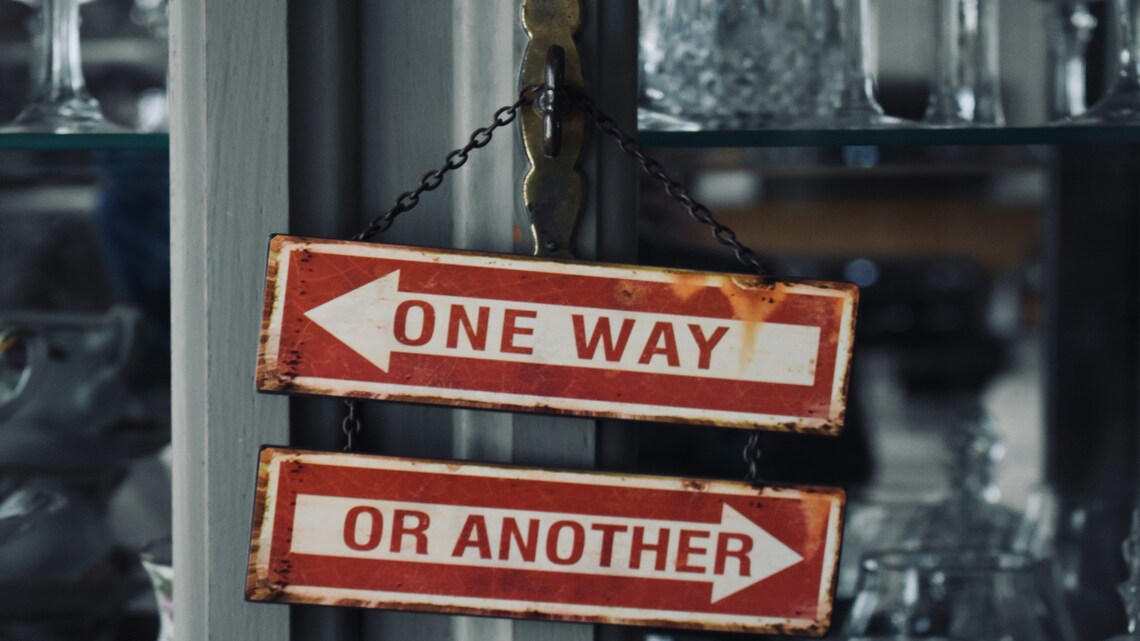



"If it works, don't touch it." What if no one knew what would happen if you did?
“If it works, don't touch it.”
For systems that have been running for many years, that may sound like a sensible approach. After all, unnecessary changes can introduce problems of their own.
The problem begins when the company avoids change not out of caution, but because no one can confidently predict what the consequences will be.
No one fully understands certain parts of the system. Documentation is incomplete or outdated. Some business rules exist only in the code. Integrations have accumulated over the years, and their dependencies are unclear. Before making a change, the team needs to consult one of the few people who still know how everything fits together.
At that point, the problem is not simply that the system is old.
It is that changing it no longer feels safe.
When caution turns into paralysis
The warning signs usually appear gradually.
- A seemingly simple change requires far more analysis than expected
- An upgrade is postponed because no one knows exactly what it might affect
- Certain parts of the system become effectively off-limits
- Workarounds are added because fixing the underlying problem seems too risky
Over time, the organization learns to live with these limitations.
The system keeps running, which can create a sense of security.
But there is an important difference between a system that is stable and one that people are simply afraid to change.
Doing nothing carries risk too
When uncertainty is high, it is reasonable to see changing the system as a risk.
The mistake is assuming that leaving it untouched is the safe option.
While the system remains unchanged, people move to other roles or leave the company. Institutional knowledge disappears. Components age. Dependencies lose support. New requirements emerge and have to be accommodated within an environment that fewer people fully understand.
The risk does not disappear.
It quietly accumulates.
And the longer this continues, the harder it may become to make a change when one is eventually unavoidable.
When your architecture depends on someone's memory

Having people with deep knowledge of critical systems is valuable.
Depending on those people every time the system needs to change is something else entirely.
- “We need to check with that person first.”
- “Don't change this table without talking to the person responsible for it.”
- “Something else uses this field, but we're not exactly sure what.”
Statements like these may indicate that important knowledge required to operate and evolve the system has never been properly captured.
Instead, it exists in the experience and memory of a few people.
That turns technical knowledge into an operational dependency. And the more critical the system, the greater the risk created by that concentration of knowledge.
Before modernizing, reduce the uncertainty
When no one fully understands a system, replacing it entirely can be just as risky as continuing to avoid changes.
Modernization therefore does not have to begin with a rewrite or a major migration.
It can begin by rebuilding knowledge about the system.
- What does the system depend on?
- Which integrations exist?
- Where are the critical business rules?
- What happens when a particular function changes?
- Which areas have enough test coverage to support changes safely?
- Where is critical knowledge concentrated?
AI tools can also assist with this work by analyzing large codebases, identifying relationships between components, helping reconstruct documentation, and supporting the creation of tests.
But technology does not remove the need to understand and validate how the system actually behaves.
The initial goal is different: reduce uncertainty until the organization can once again make informed decisions about what can — and should — be changed.
Learn more
If your team avoids certain changes because no one knows exactly what might happen, the biggest problem may not be the age of the technology.
It may be how much knowledge the organization has lost about a system it still depends on.
Schedule an initial conversation with TruStep. We can discuss your current environment, identify the main sources of risk, and explore ways to regain control of your systems before deciding how to modernize them.